A Master Without Precedent: Tongxi Li (Michael Lee)
Behind one man's extraordinary journey lies the spiritual continuity of Chinese civilisation across more than a century
Global N Press
6/26/202610 min read
[Lineage] One Unbroken Transmission: An Artistic Bloodline Spanning 130 Years
To understand Tongxi Li, one must first understand his teachers.
His mentors were the true founding figures of modern Chinese art history:
Yan Wenliang (1893–1988) — regarded as the Father of Modern Chinese Oil Painting Education. After studying in France, he founded the Suzhou School of Fine Arts, inaugurating the systematic teaching of oil painting in China.
Liu Haisu (1896–1994) — a pioneer of the modern Chinese art movement and founder of the Shanghai Academy of Fine Arts, who achieved a remarkable synthesis of Western Impressionism and the Chinese spirit of xieyi (expressive brushwork).
Shen Yinmo (1883–1971) — foremost among the Four Great Calligraphers of the Republican era, a master whose art drew upon the Tang and Song dynasties whilst shaping generations that followed.
Shen Yinmo was born in 1883. Counting from that year to the present day, as Tongxi Li still takes up his brush —
This single lineage of artistic transmission has now spanned more than one hundred and thirty years.
This is not one man's story. It is the most essential vein running through the history of modern Chinese art, passed hand to hand by successive masters — one brushstroke at a time.
These mentors counselled Tongxi Li, each in their own way, with the same conviction:
"To absorb all traditions with an open mind, to bring them into harmonious unity — only then can each brushstroke carry the full weight of the soul."
What they gave him was not technique alone, but a mission: to keep this lineage flowing, unbroken.
Through years of devoted practice, the young Tongxi Li published work under a pen name and earned the reputation of a prodigious talent. In the 1960s, he was invited to travel across China, collaborating through the night with elder masters, earning the affectionate title of "Young Teacher Li." At the time, no one could have known that this young man would one day carry a century-old tradition across the Pacific — and into the world.
[Prologue] In This Age of Speed, We Owe Beauty a Little Time
We live in an age that worships speed.
Information is measured in seconds. Wealth is counted in minutes. Success is tallied by the year. Everything accelerates — everything, that is, except one thing: something that cannot be hurried, cannot be replicated, and cannot be generated by any algorithm.
Beauty requires time. It requires history. It requires depth.
True artistic beauty has never been the product of a single person or a single moment. It is the accumulated gaze of generations, layered upon the same sheet of rice paper — the convergence and flow of a century of tradition through the tip of one brush.
And so, when we draw close to Tongxi Li — celebrated Chinese-American painter and calligrapher — what we encounter extends far beyond the personal legend of one artist.
What we encounter is a living lineage stretching across more than one hundred and thirty years, traversing the most luminous chapters of modern Chinese art history.
One hundred and thirty years. This is not the achievement of a single individual. It is the finest testimony to the enduring vitality of Chinese culture and art — surviving war, revolution and the vast cultural distance between East and West.
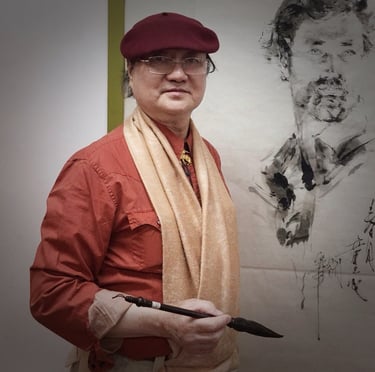
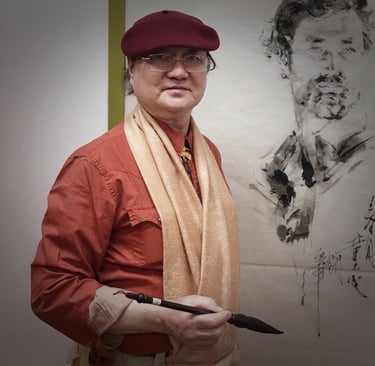
Tongxi Li — painter, calligrapher and cultural envoy, photographed with brush in hand before one of his ink works
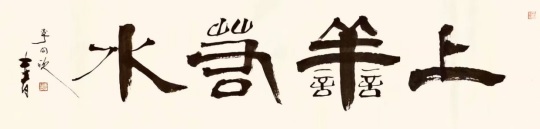
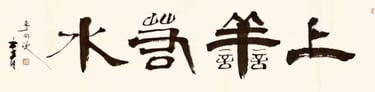
Calligraphy · Shang Shan Ruo Shui (The Highest Good Is Like Water) — Laozi
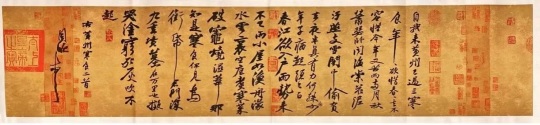
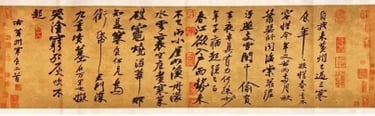
Calligraphy scroll · Classical cursive script
[Recognition] 2015: A Nation Pays Its Highest Honours to a Cultural Envoy
The Mid-Autumn Festival, 2015. New York.
Chinese President Xi Jinping was visiting the United States, and convened a reception with representatives of the overseas Chinese community — a gathering of political, business and cultural leaders from across American society.
In the seat reserved for the art of painting and calligraphy, there was only one place for the entire eastern seaboard of the United States.
That name was Tongxi Li.
In his capacity as a cultural envoy — bearing as a gift the ceremonial presentation box of Diaoyutai State Guesthouse — he was present at this historic occasion, photographed together with President Xi Jinping and his wife.
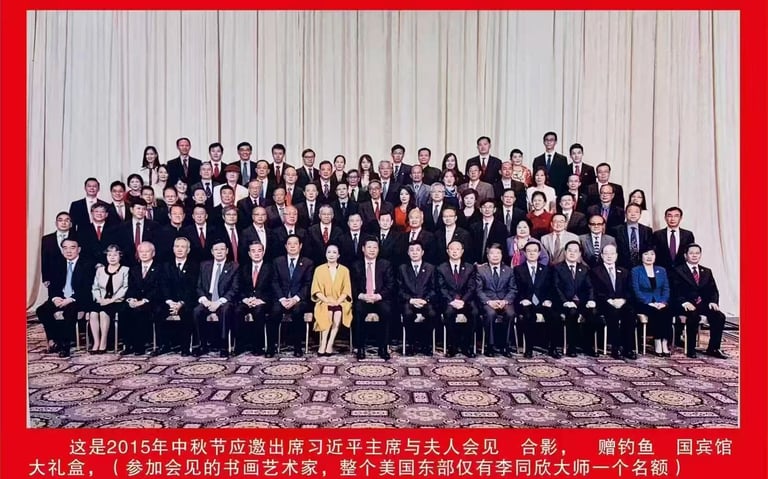
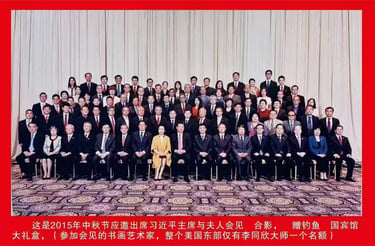
Mid-Autumn 2015: Tongxi Li attends the reception hosted by President Xi Jinping and his wife. He was the sole representative of Chinese painting and calligraphy from the entire eastern United States
The significance of that moment was immeasurable. The nation's gaze crossed the Pacific and, among all overseas Chinese painters and calligraphers, chose him — a recognition not merely of one individual, but of the highest tribute to the mission of transmitting and safeguarding Chinese culture and art beyond China's shores.
A nation's cultural soft power is never an abstraction. It lives in every person who, like Tongxi Li, persists in a foreign land — steadfastly carrying and conveying the civilisation of China.
[Dialogue] What Has Carried Chinese Art Into the World?
In the early 1980s, Tongxi Li travelled to the United States, where he studied Western oil painting and drawing at Jacksonville University.
He did not lose himself in the Western tradition, nor did he set Chinese art and Western aesthetics in opposition. Instead, he chose a path both more demanding and more expansive —
To root himself in Chinese culture whilst building a bridge in the language of the world — allowing the beauty of the East and the forms of the West to meet upon the same canvas.
This synthesis was not compromise. It was confidence. Only a culture with truly deep roots can, when confronted by another civilisation, refuse to be assimilated — and instead ignite a more brilliant light through the very collision.
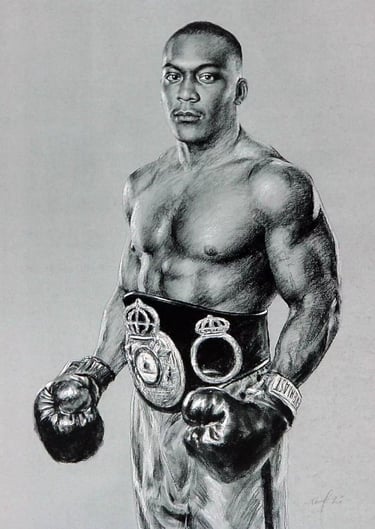
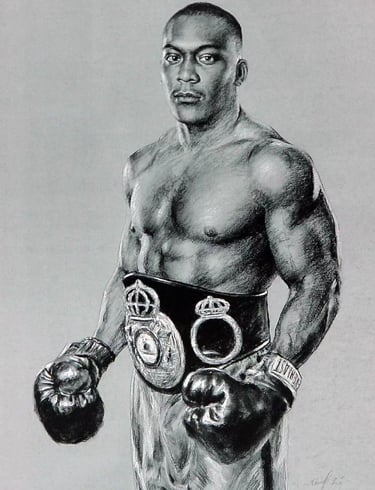
American network broadcasters WNBC and WCBS devoted dedicated coverage to his work. Spanish singing legend Julio Iglesias, world heavyweight boxing champion Bruce Seldon and a Justice of the New York Supreme Court were among the many distinguished figures who acclaimed him as a Master Painter. Members of royal families and heads of state from multiple nations competed to acquire his works.
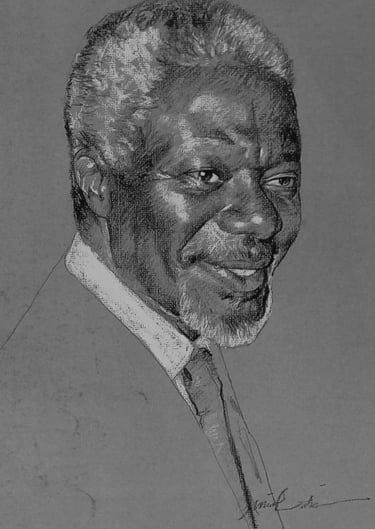
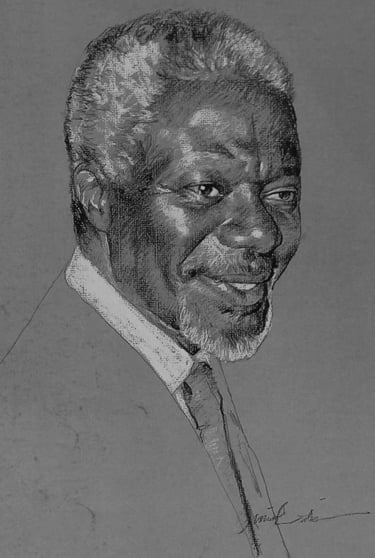
Portrait of UN Secretary-General Kofi Annan
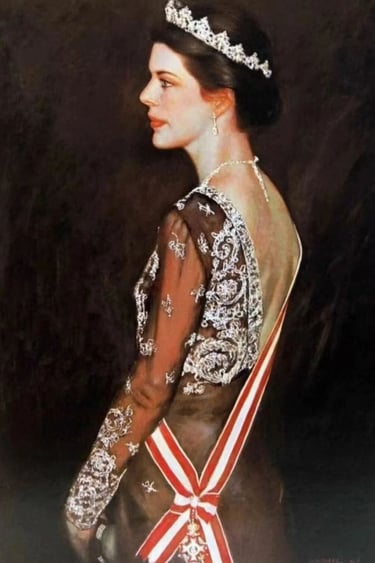
Beyond collecting, Tongxi Li was commissioned to paint portraits of some of the most prominent figures of the era: UN Secretary-General Kofi Annan, former US Presidents Bill Clinton and George W. Bush, New York Mayor David Dinkins, Spanish singing legend Julio Iglesias, and New York Mayor Eric Adams. One Chinese brush — and with it, he captured the faces of half the world. This stands as one of the most eloquent testaments to Chinese art's arrival on the world stage.


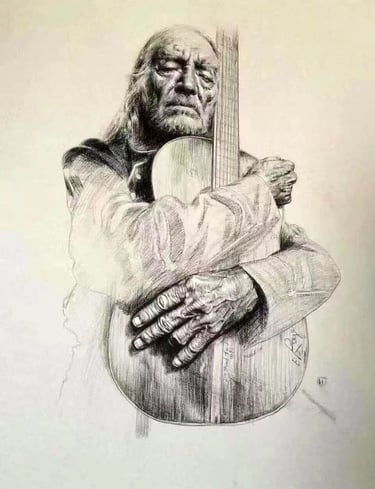
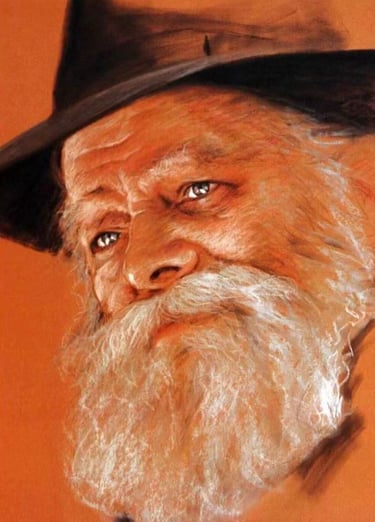
Sketch · Guitarist
More moving still was his role as a transmitter of the cultural flame. Among his students, one name came to resound throughout the Chinese artistic world:
The celebrated Chinese painter Chen Yifei was a student of Tongxi Li.
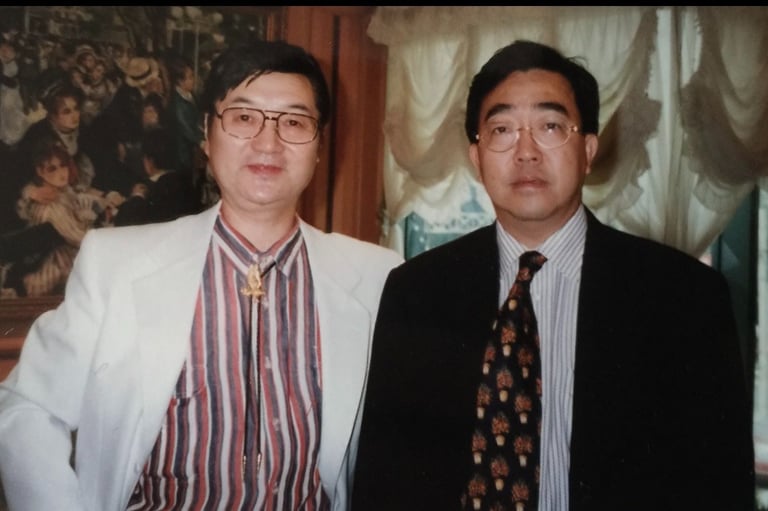
Tongxi Li (left) with his student Yifei Chen (right)
Yifei Chen's masterwork Warmth of Yu Tang sold for 149.5 million RMB, setting an auction record for Chinese oil painting; Mountain Wind achieved 81.65 million RMB, rewriting the world record. He became the first Chinese painter of the Reform and Opening-Up era to achieve genuine recognition in both Eastern and Western art markets.
Master and student — two generations, each in turn conquering the world beyond the Pacific. This was no accident. It was the inevitable fruit borne by a tradition with deep roots.

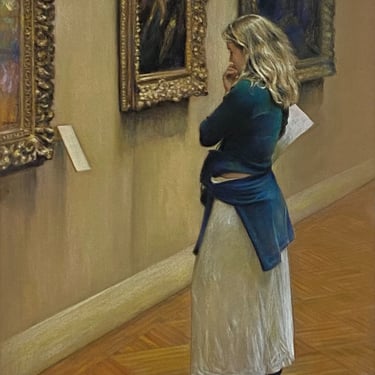
Oil painting by Tongxi Li — a Western gallery visitor in contemplation

This capacity to synthesise Eastern and Western artistic language sets Tongxi Li's work apart in any Western gallery. His oil paintings carry both the luminous depth of Western realism and the atmospheric spirit of Eastern aesthetics — an Eastern eye, fixed upon Western art; and the gaze itself becoming a work of art.
[New Horizons] From East to West, from West to the Middle East — The Light of Civilisation Reaches Further Still
In 2005, on the occasion of the 60th anniversary of the United Nations, Tongxi Li was invited to hold an oil painting exhibition at UN Headquarters in New York, telling the story of China through Chinese brushwork before the world. He subsequently founded the East-West Art and Culture Association in the United States and served as its President, uniting Chinese and American artists in the co-organisation of hundreds of exhibitions across both countries.
Those hundreds of exhibitions were hundreds of handshakes between Eastern and Western civilisation — hundreds of opportunities for the world to look anew at the beauty of Chinese culture — hundreds of moments in which the language of art said plainly: Chinese culture deserves to be seen by the world.
In 2019, on the 70th anniversary of the founding of the People's Republic of China, he returned to his homeland, travelling through Beijing, Shanghai, Chongqing and Guangxi to participate in and organise a series of Sino-American cultural and artistic exchange activities.
And now, the journey of this brush has not yet reached its final mark — it is pointed towards a new land.
The royal family of the United Arab Emirates has extended an invitation to Tongxi Li.
This land — cradle of an ancient Arabian civilisation, and today renowned throughout the world for its openness and inclusiveness — has opened its doors to this Chinese artist. The invitation carries a significance far exceeding that of any single cultural event. It marks the moment when a lineage of Chinese culture, sustained across more than one hundred and thirty years, begins to extend into a third great civilisational sphere: from the motherland of Chinese civilisation, to the stages of the Western world, and now to the halls of the Arab world.
Chinese, Western, Arabian — three great civilisations, brought together by a single brush.
The atmosphere and philosophical thought of Chinese art will here enter into dialogue with the profound aesthetic traditions of the Arab world; the emptiness and spiritual vitality of Eastern ink painting will, beneath the sunlight of the Gulf, find new resonance and new understanding.
This is not a personal honour for one artist. It is the most vivid inscription of Chinese cultural soft power in a new era: when a nation's culture is sufficiently deep and sufficiently confident, it will naturally cross the boundaries of geography, the barriers of language, the differences of faith — and find, within the shared aesthetic emotions of humanity, the place that belongs to it.
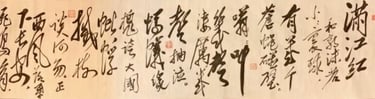
Calligraphy · Man Jiang Hong (The River All in Red) — Yue Fei
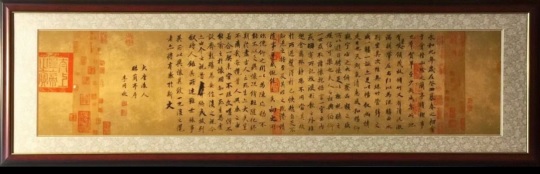
Framed calligraphy scroll · Orchid Pavilion Preface style
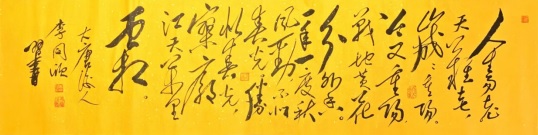
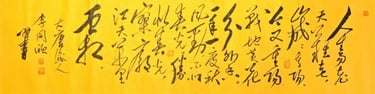
Calligraphy on gold ground · cursive script poem
[Coda] This Light Illuminates the Cultural Confidence of the Chinese Nation
What has never changed throughout the life of Tongxi Li?
It is the genetic inheritance of Chinese culture, transmitted across more than one hundred and thirty years — the flame of civilisation entrusted to him by the masters Yan Wenliang, Liu Haisu and Shen Yinmo.
That flame he has guarded for more than seventy years of brushwork. He carried it across the Pacific and into the halls of the Western world; now it reaches further still, towards the land of Arabian civilisation.
From the birth of his mentor Shen Yinmo in 1883, to Tongxi Li today as he turns his brush towards the Middle East — this vein of Chinese art has traversed more than one hundred and thirty years. It has passed through war and revolution, across the immense cultural distance between East and West, and now continues its passage towards an ever broader expanse of human civilisation.
What this light illuminates is the undimming cultural confidence of the Chinese nation.
Not the confidence of any single individual, but the most composed, most profound and most resolute response of a nation bearing five thousand years of civilisation — offered to this world of breathless change:
Chinese culture — born of the East, offered to all humanity.
Chinese art — a thousand years of refinement, come to meet the world.
Chinese civilisation — ever-flowing, its brilliance enduring through the ages.
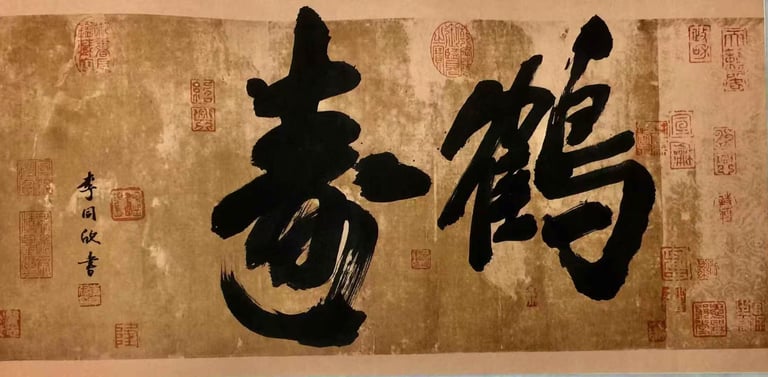
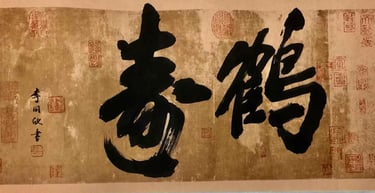
Calligraphy · He Shou (Crane Longevity)
[Roots & Soul] Why Chinese Art Is Irreplaceable
The reason Chinese culture and art have endured across millennia is that what they carry has never been merely technique — it is a way of seeing the world.
Chinese painting and calligraphy are defined by yi jing — the cultivation of atmosphere and inner resonance. Mountains and rivers are not merely mountains and rivers; they are a dialogue between the human spirit and the cosmos. Brushwork is not merely brushwork; it is the outward expression of character and philosophical thought. This aesthetic system — built upon qi yun (spiritual vitality), yi xiang (imagery) and liu bai (deliberate emptiness) — represents a dimension of the spirit that no digital tool, no artificial intelligence, can truly replicate.
Western art grounds itself in form, using light and shadow to render the objective world. Chinese art is animated by meaning, using ink and brush to give voice to the subjective universe. The two traditions are not ranked above one another — they are different interpretations of beauty by two branches of human civilisation.
And the singular quality of Chinese art lies precisely in its irreplaceability.
It is this irreplaceability that ensures Chinese art has not been diluted by globalisation, but has instead revealed ever more profoundly its deep civilisational allure. Tongxi Li has spent more than seventy years walking this lineage — as both witness and keeper of the flame.
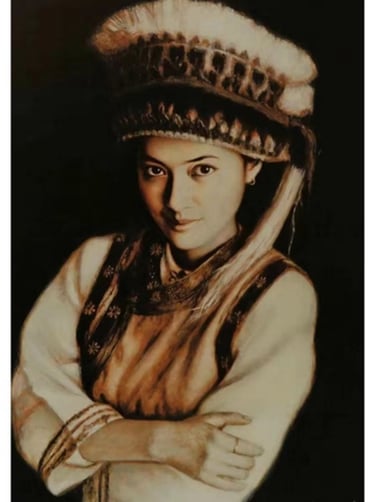
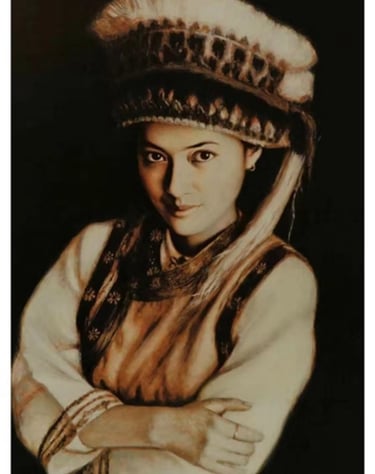
Oil painting · Portrait in Traditional Costume
Portrait of World Heavyweight Champion Bruce Seldon
Oil Painting · Royal Portrait
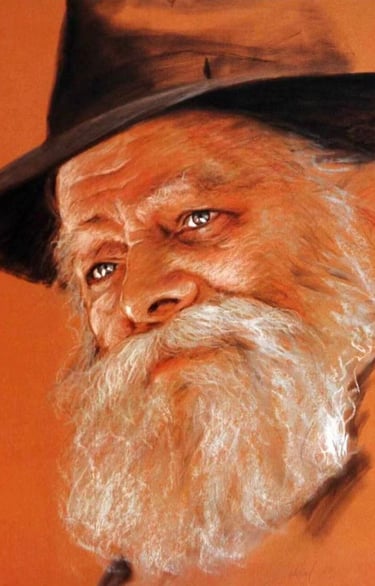
Pastel · Character Study
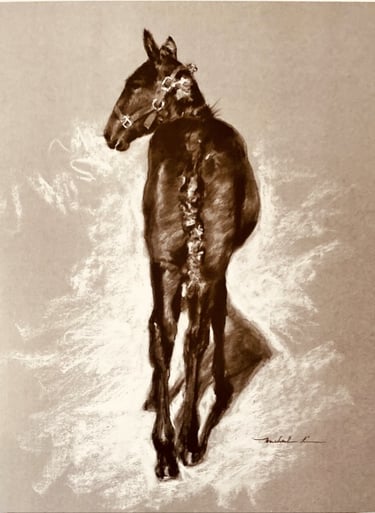
Tongxi Li (Michael Lee) · Sketch · Horse