
Meta Releases LLaMA 3.1 Model Family, Challenging Closed AI with Open-Weight Strategy
Meta has released LLaMA 3.1, positioning it as its most capable open-weight large language model to date.
BUSINESSES RESHAPING OUR WORLD
Global N Press
7/13/20241 min read
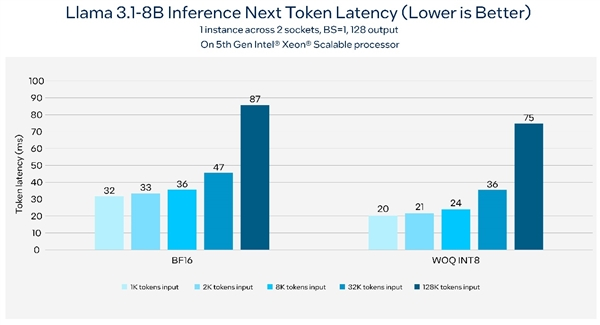

Meta has released LLaMA 3.1, positioning it as its most capable open-weight large language model to date. The new model family includes a range of parameter sizes—from lightweight 8B and 70B versions to a flagship 405B model—catering to both research and production-scale deployments.
According to benchmarks released by Meta, the 405B model performs comparably to leading closed models like GPT-4 and Claude 3.5 Sonnet across a variety of evaluations, while the smaller 8B and 70B versions are reported to surpass many competitors in their respective classes.
A key aspect of the release is its open-weight license, which grants companies and researchers the freedom to run and fine-tune the models on their own infrastructure. This approach, contrasting with the API-only access of closed models, is viewed as a strategic move by Meta to foster a broader ecosystem and challenge the dominance of a handful of proprietary providers.
Industry analysts suggest that LLaMA 3.1 is poised to accelerate AI adoption in sectors where data sovereignty, on-premise deployment, and cost efficiency are paramount. The launch also intensifies competition among cloud providers (hyperscalers) to offer optimized hosting and tooling for these open models.
For many governments and enterprises, LLaMA 3.1 presents a new strategic pathway: the option to build proprietary AI solutions atop a recognized, state-of-the-art model, reducing sole reliance on foreign, closed-source APIs.