
OpenAI's Reported 'Orion' Model Falls Short, Signaling Broader Industry Scaling Challenges
According to multiple reports, OpenAI has completed initial training of a new large language model, internally codenamed "Orion," which was anticipated to represent a significant advance beyond GPT-4o.
BUSINESSES RESHAPING OUR WORLD
Global N Press
9/20/20241 min read
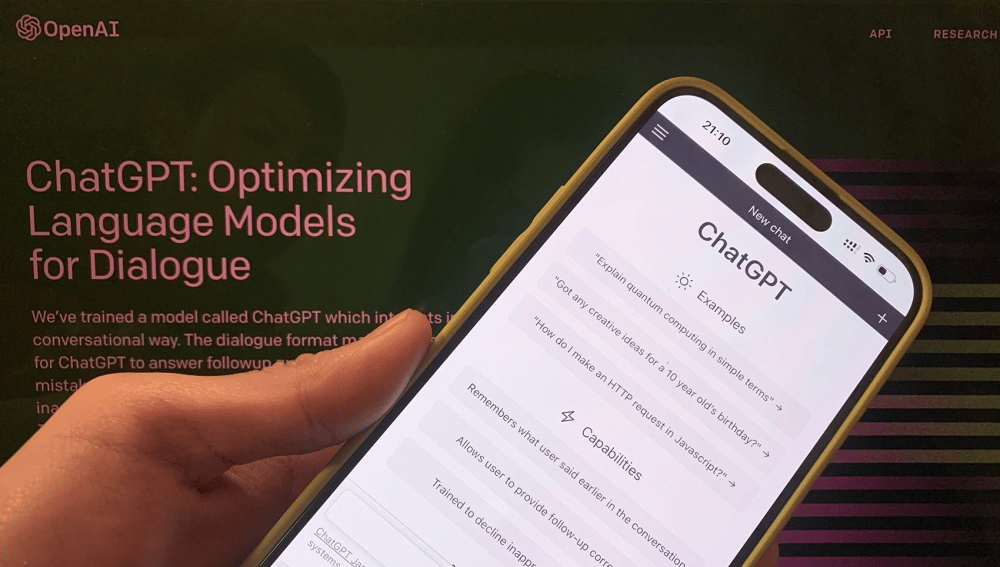

According to multiple reports, OpenAI has completed initial training of a new large language model, internally codenamed "Orion," which was anticipated to represent a significant advance beyond GPT-4o. However, these reports indicate the model's performance did not meet internal benchmarks for a generational leap and shows no decisive advantage over current frontier models.
This outcome has intensified ongoing discussions within the AI research community about the limits of current scaling strategies. Analysts suggest that simply increasing model size, computational power, and data may be yielding diminishing returns, raising questions about whether LLMs are approaching a performance plateau in their current architectural form.
This pattern appears to extend beyond OpenAI, with other leading labs like Google and Anthropic also experiencing more gradual improvements or delays in their next-gen releases, pointing to a possible industry-wide challenge.
For enterprises and policymakers, the situation underscores that progress in AI may not follow a smooth, exponential curve. Future breakthroughs may increasingly depend on fundamental innovations in model architecture, novel training methods, and hybrid systems, moving beyond the paradigm of merely building larger models.
In line with this, OpenAI is reportedly increasing its investment in alternative approaches, such as the reasoning-focused o1 model family, which uses explicit chain-of-thought processes to improve complex task accuracy. This signals a strategic shift in focus from pure scale toward more efficient and reliable inference.