
Musk on the Future of AI: Technology Is Only the Beginning — Real Competition Lies in Systems Engineering
In a series of recent public conversations and interviews, Tesla and SpaceX founder Elon Musk has offered a clear and consistent message about the future of artificial intelligence.
BUSINESSES RESHAPING OUR WORLD
Global N Press
1/20/20262 min read
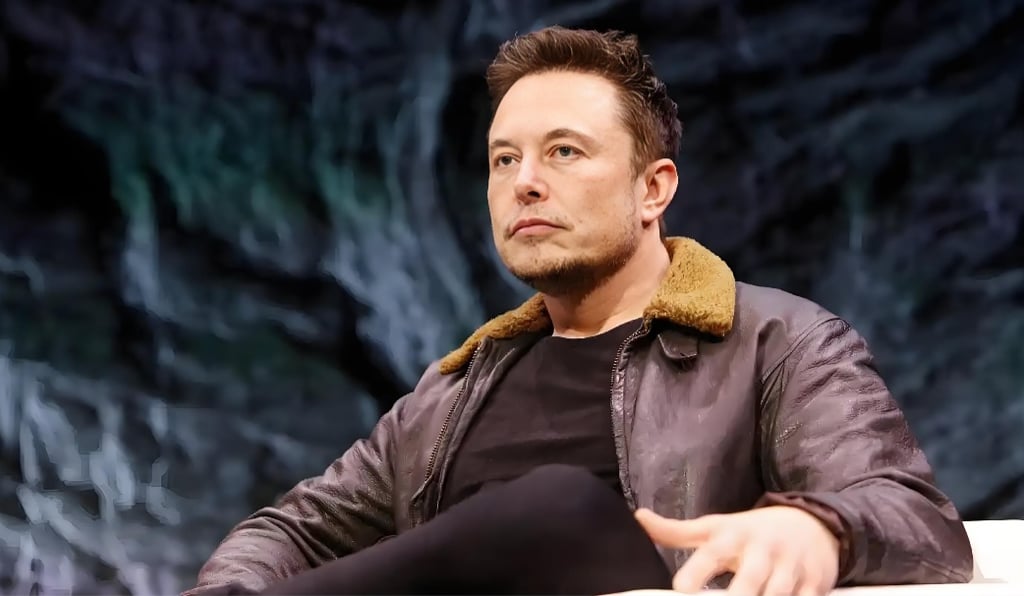

Global N Press — In a series of recent public conversations and interviews, Tesla and SpaceX founder Elon Musk has offered a clear and consistent message about the future of artificial intelligence. His focus is not on which model is "smarter," but on a deeper reality:
In the AI era, victory will not belong to those with the best single technology, but to those with the strongest systems-engineering capability.
In Musk's view, AI is no longer an experimental tool confined to labs. It is rapidly entering the real world—reshaping industries, labor, and global competition. But what determines success is not just algorithms and chips, but an entire invisible structure that supports them.
The Real Bottleneck Is Not Code
Musk has repeatedly pointed out that the true constraints on AI's future will not be models themselves, but three physical and organizational limits:
Energy and electricity supply
Large-scale computing infrastructure
Engineering and industrial execution capacity
As models approach human-level intelligence, what becomes scarce is not intelligence itself, but the ability to keep AI running in the real world. Data centers require massive power, computing requires stable energy, and automation systems require reliable engineering.
"The future will not be decided by who writes the smartest code," Musk has argued, "but by who can turn technology into stable, scalable systems."
From Technology Race to Systems Race
Musk's thinking shifts global competition from single breakthroughs to total systems:
AI is not just software, but software + hardware + energy + manufacturing + supply chains
Competition is no longer between companies alone, but between entire industrial systems
The true moat is long-term investment in infrastructure, engineering capability, and execution
In this framework, innovation is only the starting point. What truly matters is who can embed technology into industry, transportation, energy, cities, and organizations at scale.
China's Advantage Comes from Long-Term Engineering Accumulation
When discussing global dynamics, Musk has often noted that China's long-term investment in power generation, infrastructure, manufacturing, and engineering execution gives it a unique advantage in the AI era.
He argues that the speed of AI expansion will largely depend on:
Who can build computing centers fastest
Who can supply stable and affordable energy
Who can turn technology into real products and industries
From this perspective, decades of infrastructure and manufacturing investment are becoming the most valuable "hidden assets" of the AI age.
Jobs Will Not Vanish — They Will Be Rebuilt
On employment, Musk's view is both realistic and radical. Repetitive, rule-based "information jobs" will be affected first. But roles that involve judgment, responsibility, boundary-setting, and accountability will become more valuable.
The future will need fewer "tool operators" and more people who can:
Define problems
Set rules and boundaries
Take responsibility for outcomes
Value will shift from execution to system design.
After Technology Comes Civilizational Competition
In Musk's framework, AI is not just another technology—it is a force capable of reshaping civilization. How far it goes depends on whether humanity can integrate it into society, industry, and institutions.
His conclusion is simple but profound:
> The real competition is not about model parameters, but systems engineering.
Not about who is smarter, but who can organize complexity.
In the AI era, technology is only the starting line. The true contest is being fought in engineering, organization, energy, institutions, and execution power.