
EU Commission Slashes 2026 Growth Forecast to 1.1%, Warns of Stagflationary Shock as Middle East Energy Crisis Drives Inflation to 3.1%
On May 21, 2026, the European Commission‘s spring forecast projected EU GDP growth at 1.1% for 2026, down 0.3 points from autumn 2025; the eurozone outlook was lowered to 0.9%, from 1.2% previously.
EUROPEAN UNION,ECONOMY
Global N Press
5/21/20262 min read
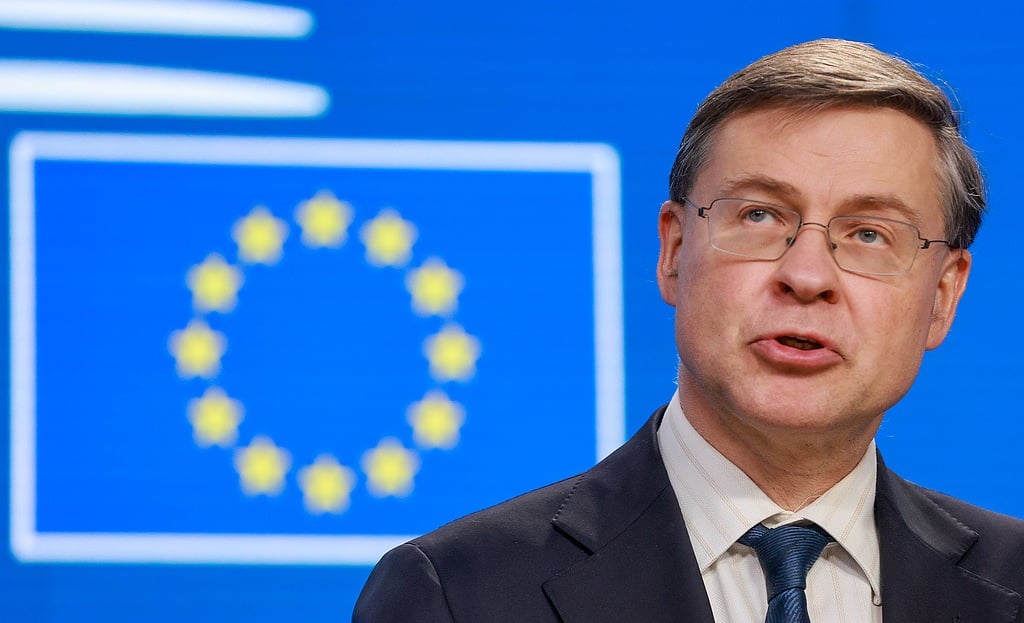
On May 21, 2026, the European Commission released its spring economic forecast, cutting the European Union‘s GDP growth projection for 2026 to 1.1 percent, a sharp 0.3 percentage point reduction from the 1.4 percent forecast in autumn 2025. The eurozone outlook was revised down even further, from 1.2 percent to 0.9 percent. For 2027, EU growth is now projected at 1.4 percent, down from 1.5 percent, with the eurozone slipping to 1.2 percent from 1.4 percent. The Commission attributed the downgrade directly to the Middle East conflict, which has kept the Strait of Hormuz disrupted and driven oil prices above 100 dollars per barrel since late February.
The inflation picture has deteriorated markedly in parallel: eurozone inflation for 2026 is now forecast at 3.0 percent, up sharply from the previous estimate of 1.9 percent and well above the European Central Bank’s 2 percent target, while EU-wide inflation is expected to climb to 3.1 percent—a full percentage point higher than previously projected. European Commissioner for Economy Valdis Dombrovskis described the situation as a “stagflationary shock,” warning that governments have far less fiscal room to respond than they did during the pandemic. Germany, the bloc‘s manufacturing powerhouse, saw its 2026 growth forecast slashed from 1.0 percent to just 0.5 percent, with S&P Global’s May PMI data showing eurozone business activity contracting for a second consecutive month and the composite PMI falling to its lowest level in 31 months.
The Commission outlined a more severe alternative scenario in which prolonged energy disruptions cause prices to peak only at the end of 2026 before gradually receding through 2027, warning that under such conditions growth forecasts for both years could “roughly halve” and economic activity would fail to recover. The long-term decline in the EU‘s unemployment rate “is set to come to an end,” the forecast cautioned. While the Commission stressed that the EU is better prepared for this shock than during the 2022 energy crisis—thanks to supply diversification, decarbonization investments, and reduced energy consumption—it acknowledged that risks remain “tilted firmly to the downside,” with potential shortages of refined petroleum products, fertilizers, and other industrial inputs threatening to cascade through global supply chains. Financial markets now price in a rate hike at the ECB’s next meeting on June 11, with one or two further increases possible over the next twelve months.