EU Cyprus Summit Tackles Iran War Fallout as Leaders Break Through on Ukraine Loan and Mutual Defense
On April 23 and 24, 2026, EU leaders convened in Cyprus, the rotating presidency holder, for informal talks on Iran war fallout, mutual defense, and the 2028-2034 financial framework, with security reinforced following a drone attack on a British base on the island.
EUROPEAN UNION,POLITICS
Global N Press
4/24/20261 min read
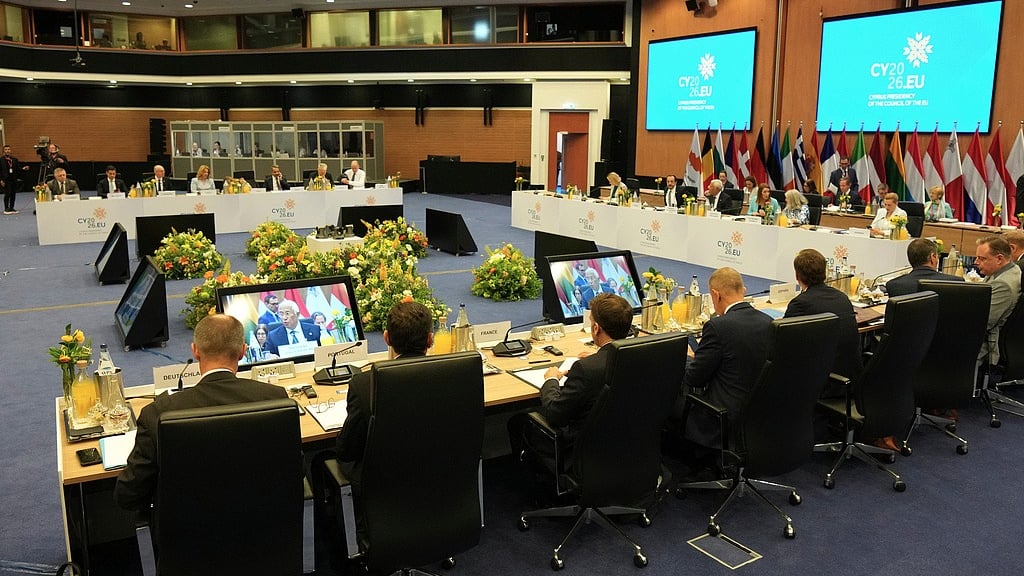

On April 23 and 24, 2026, the leaders of the 27 European Union member states convened for an informal summit in Cyprus, the current holder of the rotating EU presidency, with discussions centered on the geopolitical and economic impact of the Iran war, EU mutual defense, and the bloc’s 2028-2034 multiannual financial framework. Security at the summit venues was heightened following an earlier drone strike on a British military base in Cyprus.
A defining breakthrough came on April 22, on the eve of the summit, when EU ambassadors approved a €90 billion loan for Ukraine and the 20th sanctions package against Russia, after Hungary’s new Prime Minister Péter Magyar—whose Tisza party defeated Viktor Orbán in parliamentary elections—lifted Budapest’s four-month veto. Ukrainian President Volodymyr Zelenskyy attended the summit in person. On the sidelines, the Presidents of the European Parliament, the European Commission, and the European Council signed the “One Europe, One Market” roadmap, setting clear timelines to strengthen the EU single market by 2027.
On mutual defense, Cypriot President Nikos Christodoulides sought to advance an operational plan for invoking Article 42.7 of the EU Treaty—the bloc’s mutual defense clause—but diplomats said discussions ultimately focused largely on energy prices and geopolitics, with many European leaders reluctant to treat the Middle East conflict as a European war. EU leaders also held a working lunch with their counterparts from Lebanon, Jordan, Egypt, Syria, and the Gulf Cooperation Council, collectively welcoming the U.S.-Iran and Israel-Lebanon ceasefires. European Council President António Costa stated unequivocally that “the European Union is not a part of the conflict, but we will be a part of the solution.”