
EU Economy Faces Stagflation Risk as Energy Crisis and Industrial Recession Deliver Dual Blow
On March 27, 2026, European Commissioner for Economy Valdis Dombrovskis warned following a virtual Eurogroup meeting that the European Union is facing the risk of a stagflationary shock, a scenario where slower growth coincides with higher inflation, driven by surging energy prices resulting from the Middle East conflict.
EUROPEAN UNION,ECONOMY
Global N Press
3/27/20261 min read
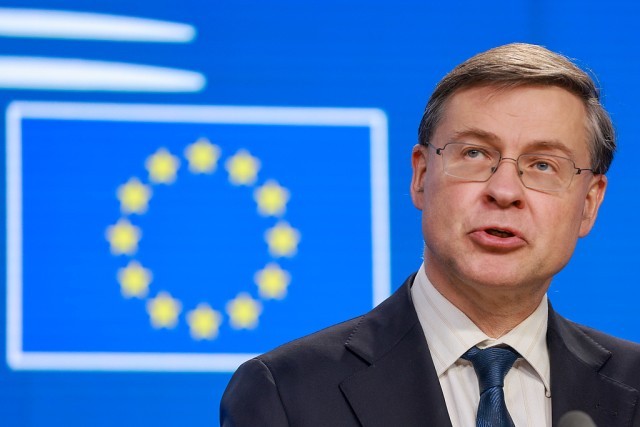

On March 27, 2026, European Commissioner for Economy Valdis Dombrovskis warned following a virtual Eurogroup meeting that the European Union is facing the risk of a stagflationary shock, a scenario where slower growth coincides with higher inflation, driven by surging energy prices resulting from the Middle East conflict. Dombrovskis stated that even if energy supply disruptions prove relatively short-lived, EU economic growth in 2026 could be about 0.4 percentage points lower than projected in the Commission’s autumn forecast, while inflation could rise by up to 1 percentage point.
Following the US-Israeli military strikes on Iran, the disruption of shipping through the Strait of Hormuz has kept Brent crude prices above $100 per barrel for two consecutive weeks, with European Commission President Ursula von der Leyen revealing that the EU incurred an additional 3 billion euros in energy import costs in just the first 10 days of the conflict. Data shows that the eurozone composite PMI plunged from 51.9 in February to 50.5 in March, hovering near the contraction line, while Germany’s economic sentiment index collapsed from 58.3 to negative 0.5, with widespread production stoppages and output cuts in pillar industries such as chemicals, steel, and automobiles.
In response to the crisis, the EU released the Industrial Accelerator Act on March 4, requiring government procurement to prioritize EU-made products and imposing additional screening thresholds on foreign investment in an effort to reverse de-industrialization. European Central Bank President Christine Lagarde stated on March 25 that the eurozone economic outlook faces new uncertainties, while Dombrovskis acknowledged that most EU countries have very limited policy space due to previous economic shocks and increased defense spending needs.