
Fed Holds Rates Steady for Second Straight Meeting, Dot Plot Signals Hawkish Shift
The Federal Reserve held its benchmark interest rate steady for the second consecutive meeting on Wednesday, signaling that policymakers expect borrowing costs to remain elevated for longer than previously anticipated as new supply-side pressures cloud the inflation outlook.
UNITED STATES,POLITICS
Global N Press
3/21/20262 min read
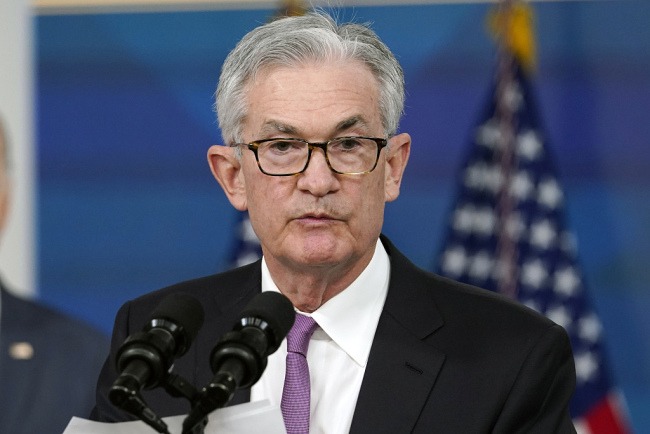

WASHINGTON, March 18 — The Federal Reserve held its benchmark interest rate steady for the second consecutive meeting on Wednesday, signaling that policymakers expect borrowing costs to remain elevated for longer than previously anticipated as new supply-side pressures cloud the inflation outlook.
Following a two-day policy meeting, the Federal Open Market Committee (FOMC) announced it would maintain the federal funds rate target range at 3.5% to 3.75%. The widely expected decision marks a continued pause in the central bank’s tightening cycle after a series of aggressive rate hikes over the past two years.
A Cautious Pause
The unanimous vote to hold rates steady reflected a cautious consensus among FOMC members. In its post-meeting statement, the committee noted that economic activity continued to expand at a solid pace, with job gains remaining robust. However, it reiterated its “strong commitment” to returning inflation to its 2% target, acknowledging the uncertain path ahead.
Analysts said the pause gives policymakers more time to assess the lagging effects of previous tightening measures, which have lifted the federal funds rate to its highest level in more than two decades.
Hawkish Dot Plot Signals Extended Tightening
While the rate decision itself did not surprise markets, the Fed’s updated Summary of Economic Projections — commonly known as the “dot plot” — sent a clear hawkish signal, revising market expectations for aggressive rate cuts later this year.
The median projection now shows FOMC participants expect only one rate cut in 2026, followed by another in 2027. That marks a sharp downward revision from previous forecasts, which had suggested a more accommodative path beginning as early as late 2025. In addition, policymakers raised their estimate for the longer-run neutral rate, suggesting that the terminal level for interest rates may be structurally higher.
Powell Warns of Dual Shocks
At a post-meeting news conference, Fed Chair Jerome Powell struck a hawkish tone, citing new external pressures that complicate the central bank’s inflation-fighting efforts.
“We are facing what I would describe as a dual shock,” Powell said, pointing to rising oil prices due to escalating tensions in the Middle East and the inflationary impact of new tariffs. “These factors are putting upward pressure on inflation expectations and could delay the progress we need to make.”
Powell also revealed that FOMC members discussed the possibility of raising rates further if inflation data fail to show sustained improvement. “We have not ruled out additional tightening,” he said, stressing that the committee’s priority remains preventing inflation from accelerating again.
Persistent Inflation Battle Ahead
Powell’s remarks reflected a shift in the Fed’s risk assessment. Previously, officials debated how long to hold rates steady before cutting them. Now, the focus is on maintaining restrictive policy for an extended period — and potentially tightening further if price pressures continue to build.
Geopolitical uncertainty and renewed trade tensions have added complexity to the Fed’s inflation outlook. Although the central bank had hoped for a gradual return to its 2% inflation target, core inflation remains above target and labor markets show little sign of cooling. Policymakers now appear to be preparing markets for a longer and potentially bumpier phase in their inflation fight.
“We are committed to staying the course until the job is done,” Powell said. “If it takes longer, it takes longer.”