
Federal Retreat and State Defiance: Immigration Enforcement Crisis Deepens U.S. Political Divides
A tense standoff between the U.S. federal government and multiple state jurisdictions over immigration enforcement has escalated into a full-blown political and constitutional crisis, exposing deep fractures within American federalism.
UNITED STATES,POLITICS
Global N Press
2/8/20262 min read
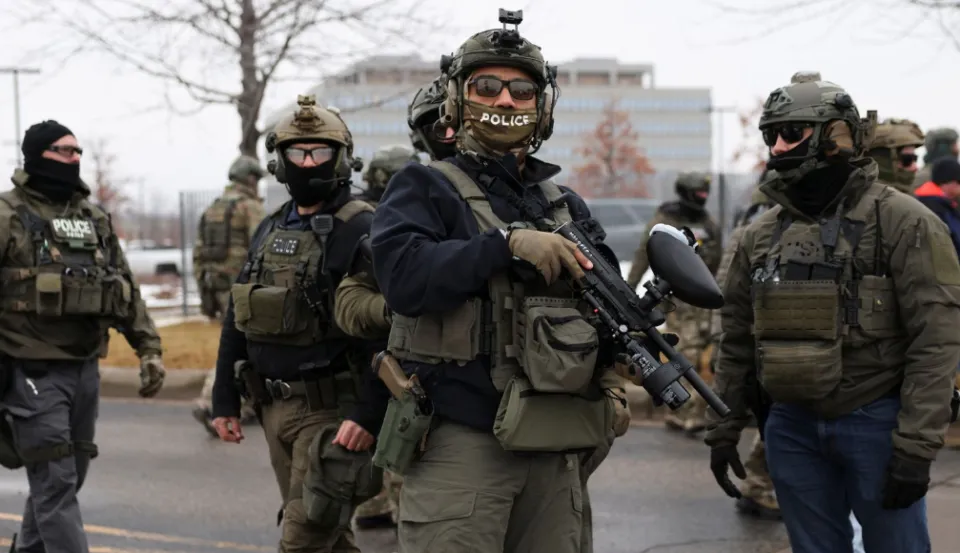

A tense standoff between the U.S. federal government and multiple state jurisdictions over immigration enforcement has escalated into a full-blown political and constitutional crisis, exposing deep fractures within American federalism. The conflict, triggered by fatal shootings during aggressive federal operations, pits expansive federal power against defiant state-led resistance, with profound implications for the upcoming midterm elections and the stability of U.S. governance.
A Policy of Force Meets Tragic Consequences
The crisis stems from the radically hardened immigration enforcement agenda of the Trump administration's second term. Bolstered by a historic $170 billion funding infusion through September 2029, agencies like Immigration and Customs Enforcement (ICE) launched "Metro Surge," deploying over 2,000 agents to Democrat-led states like Minnesota starting in December 2025. This push, aimed at meeting a goal of one million deportations annually, reached a tragic inflection point in January 2026. On January 7 and again on January 24, federal immigration officers in Minneapolis shot and killed two U.S. citizens, Renee Good and Alex Pretti, during enforcement actions. The administration defended the shootings as "self-defense," but the deaths ignited immediate and massive nationwide protests, with demonstrations from New York to Los Angeles demanding ICE be abolished.
Tactical Pivot and Unyielding Stance
Facing intense public backlash and plummeting approval ratings on immigration policy, the administration announced a partial tactical withdrawal. On February 4, Border Chief Tom Homan confirmed the pullout of approximately 700 federal officers from Minnesota. Concurrently, President Donald Trump stated in an NBC interview that a "softer touch" might be needed in enforcement, marking a notable shift in rhetoric. However, this recalibration was limited. Homan simultaneously vowed that "mass deportations are here... and we're not going to stop," and Trump insisted enforcement must remain "firm," calling targets "criminals". Analysts view this as a strategic adjustment revealing internal tensions between hardliners and moderates within the administration, rather than a fundamental policy reversal.
Escalating State-Level Resistance and Institutional Check
The federal move did not appease state and local leaders. Officials like Minneapolis Mayor Jacob Frey, while calling the drawdown "a step in the right direction," demanded a complete end to the federal operation. Resistance has since evolved into novel, institutionalized forms of oversight. In a unprecedented move, New York State Attorney General Letitia James announced on February 3 the creation of a state-run team of legal observers. These trained personnel, wearing identifying vests, will monitor and document federal immigration operations as neutral witnesses to ensure they "stay within legal bounds". The Department of Homeland Security condemned the initiative as endangering the public. Furthermore, Congressional Democrats have leveraged the power of the purse, briefly causing a "technical shutdown" of some agencies by blocking Homeland Security funding to demand stricter ICE oversight.
A Systemic Crisis for American Democracy
The confrontation now threatens systemic stability. Experts argue that by aggressively using executive power to bypass judicial and congressional checks on immigration, the administration is straining the traditional balance of the tripartite system. The crisis also highlights the dangerous politicization of governance, as immigration becomes a central wedge issue for the 2026 midterms. The situation has drawn international condemnation, with the UN High Commissioner for Human Rights condemning the "unnecessary and disproportionate use of force" and the normalization of "abuse and stigmatization of migrants". Ultimately, this is more than an immigration policy dispute; it is a battle over the limits of federal authority, the rights of states, and the very principles of accountability that underscore American democracy, with repercussions that will long outlast the current administration.