
Global Tech Giants Seek Long-Term Memory Chip Supply From SK Hynix as AI Demand Reshapes Market
Several of the world’s largest technology companies are in discussions to secure long-term access to advanced memory chips by offering financial backing to South Korean chipmaker SK Hynix, according to three people familiar with the matter.
BUSINESSES RESHAPING OUR WORLD
Global N Press
5/13/20262 min read
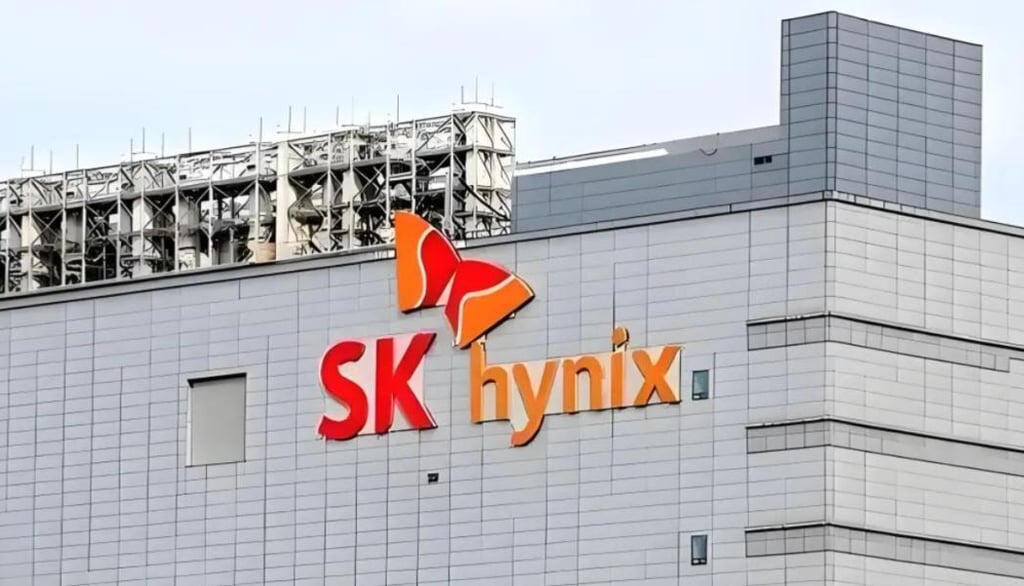

SEOUL, May 13, 2026 – Several of the world’s largest technology companies are in discussions to secure long-term access to advanced memory chips by offering financial backing to South Korean chipmaker SK Hynix, according to three people familiar with the matter.
The talks mark an unusual shift in the semiconductor industry, where buyers traditionally place orders through standard procurement contracts rather than direct investments in production capacity.
At least two global cloud providers and one AI hardware firm have proposed investing in new SK Hynix manufacturing lines or helping cover the cost of chipmaking equipment in exchange for guaranteed future supply of high-bandwidth memory (HBM), the people said. HBM has become a critical component for AI accelerators used to train and run large language models.
SK Hynix declined to comment on specific partnership discussions. In a statement, the company said it “continuously explores various ways to meet customer demand” but does not disclose commercial arrangements.
Surging AI Demand Tightens HBM Supply
The interest in strategic investment follows a sharp rise in demand for HBM, which enables faster data transfer and lower power consumption than conventional memory. HBM is now a key part of Nvidia’s latest GPU architectures, and each new generation of AI chips requires more HBM content than the previous one, analysts said.
SK Hynix is one of the few suppliers capable of mass-producing the most advanced HBM, alongside Samsung Electronics. That position has made it a focal point for companies seeking to avoid supply bottlenecks.
Industry observers compared the emerging model to long-term capacity reservations used in energy and advanced manufacturing, where buyers help fund expansion in return for supply certainty.
$2.8 Trillion AI Infrastructure Forecast
A research note published May 11 by Morgan Stanley found that roughly 39% of global chief information officers now rank AI as their highest technology priority. The bank projected global investment in AI-related data centers could reach approximately $2.8 trillion between 2026 and 2028, with annual growth averaging 33%.
The forecast has reinforced expectations of sustained high demand for semiconductors, but analysts caution that building new fabrication facilities typically takes several years and tens of billions of dollars, limiting the industry’s ability to respond quickly.
SK Hynix Shares Rise; Broader Market Risks Emerge
SK Hynix’s stock has climbed in recent weeks, contributing to gains in South Korea’s benchmark indexes. The rally reflects investor optimism over AI-driven demand.
However, research firm IDC warned earlier this year that ongoing memory shortages could disrupt the global smartphone market in 2026. It projected smartphone shipments could fall to about 1.1 billion units, down from an estimated 1.26 billion in 2025. If realized, that would be one of the sharpest annual contractions in the industry’s history.
Laptop, server, automotive and gaming electronics makers could also face higher component prices and delayed product launches, analysts said.
Industry Warning on Overcapacity
While the current competition for HBM is intense, some semiconductor industry veterans note that rapid investment cycles have historically led to overcapacity. In past downturns, memory chip prices collapsed after multiple suppliers expanded production simultaneously.
“What looks like a structural shift today could become a supply glut in 2028 if demand growth moderates,” said a semiconductor industry analyst, who asked not to be named because they are not authorized to speak publicly.
For now, the combination of rising AI deployment, limited HBM production capacity, and strategic competition among tech giants continues to favor advanced memory producers like SK Hynix. Whether that dynamic persists will depend on how quickly new supply comes online and whether AI infrastructure spending meets current forecasts.