
Guterres Warns Seven Global Challenges Are Testing UN Charter’s Resilience at Landmark Security Council Debate
On May 26, 2026, China, as UN Security Council president for May, convened a high-level open debate on upholding the UN Charter and strengthening the UN-centered international system.
UNITED NATIONS,POLITICS
Global N Press
5/26/20261 min read
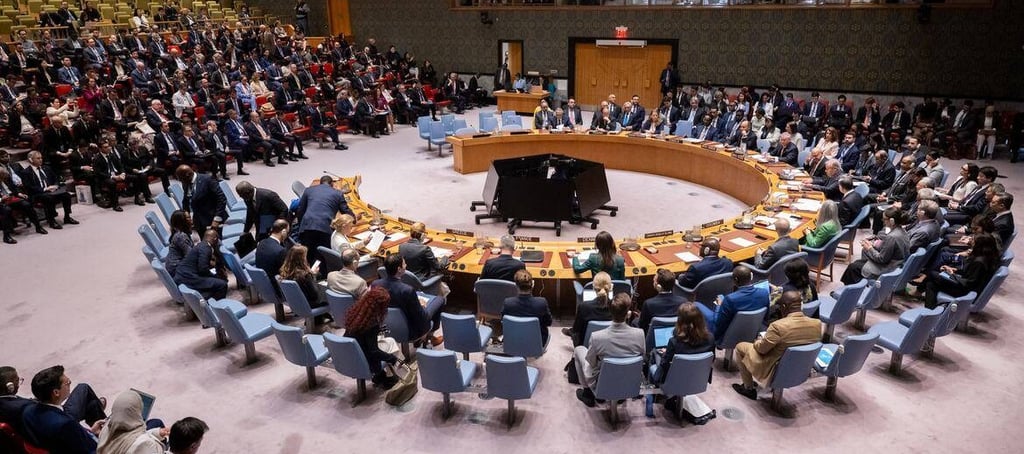
On May 26, 2026, at the initiative of China, which holds the rotating presidency of the United Nations Security Council for May, the Council convened a high-level open debate on “Upholding the Purposes and Principles of the UN Charter and Strengthening the International System with the United Nations at Its Core.” UN Secretary-General António Guterres addressed the session, describing the UN Charter as “a survival guide for humanity” while warning that its purposes and principles are now under profound and unprecedented strain.
Guterres systematically outlined seven interconnected global challenges: the dangerous erosion of international law, with core principles such as sovereign equality, territorial integrity, and the prohibition of the use of force being challenged or ignored; deepening geopolitical divisions that frequently paralyze the Security Council; the highest number of violent conflicts since the UN’s founding, with growing scale and complexity in the Middle East, Ukraine, Sudan, and beyond; global military expenditure reaching historic peaks while resources for development and humanitarian needs are drastically cut, compounded by rapid advances in artificial intelligence and autonomous weapons outpacing regulatory capacity; a “deliberate, tactical, and even blatant rollback” of human rights; widening inequality, crushing debt burdens, and inadequate financing pushing the Sustainable Development Goals further out of reach; and an accelerating climate crisis serving as a “threat amplifier.”
Guterres called for action across three priority areas—strengthening conflict prevention and peacemaking, ensuring consistent adherence to international law without selectivity or double standards, and advancing institutional reform, stressing that the absence of permanent African representation on the Security Council constitutes a “historic injustice” that undermines the body’s credibility and effectiveness. He concluded by emphasizing that no structural reform can substitute for political will, urging Council members to “defend the Charter consistently” and rebuild trust through leadership and compromise.