
IMF Sharply Downgrades Asia Growth Forecast at Spring Meetings, Warns Energy Shock Will Hit Region Disproportionately
During its April 15-16, 2026 Spring Meetings, the IMF revised down Asia’s 2026 GDP growth to 4.4%—down from 5.0% in 2025—and projected a further deceleration to 4.2% in 2027.
ASIA,ECONOMY
Global N Press
4/16/20261 min read
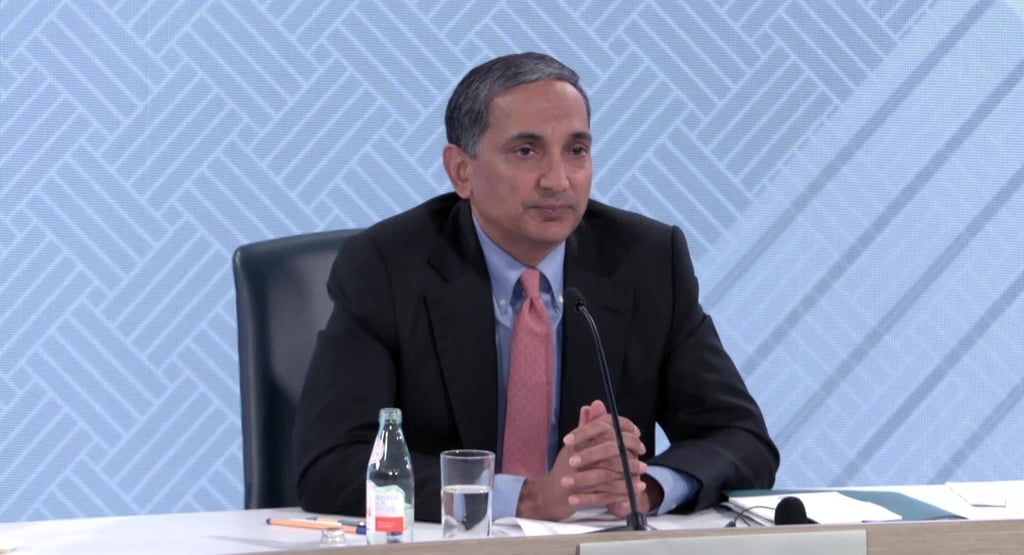

Between April 15 and 16, 2026, during its Spring Meetings in Washington, the International Monetary Fund released its latest Regional Economic Outlook for Asia-Pacific and World Economic Outlook, downgrading Asia’s overall growth forecast for 2026 to 4.4 percent, a pronounced deceleration from 5.0 percent in 2025, with a further moderation to 4.2 percent projected in 2027. Krishna Srinivasan, director of the IMF’s Asia-Pacific Department, stated unequivocally that Asia is the region most vulnerable to the Middle East energy shock, noting that oil and gas use in the region amounts to about 4 percent of its GDP—nearly double the level in Europe—and that net oil and gas imports account for approximately 2.5 percent of GDP, making “this a shock which is going to affect Asia more than other regions.” The IMF expects inflation in Asia to rise from 1.4 percent in 2025 to 2.6 percent in 2026. Should the conflict prove prolonged, Asian growth could be reduced by a cumulative one to two percentage points through 2027.
At the country level, China’s growth projection was trimmed from 4.5 percent to 4.4 percent, the Philippines was slashed from 5.6 percent to a sharply lower 4.1 percent, while India’s forecast was upgraded to 6.5 percent. Japan’s output was held at 0.7 percent and South Korea’s at 1.9 percent. Concurrent industry data showed that Asia’s crude oil imports in April plummeted 22 percent year-on-year to 20.4 million barrels per day, the lowest since 2016, as the Strait of Hormuz blockade effectively strangled shipments. Japan—which relies on the Middle East for approximately 95 percent of its petroleum—and the Philippines—which sources 98 percent of its oil from the region and declared a national energy emergency in March—exemplify the acute energy insecurity now confronting import-dependent economies across the continent. The IMF counseled Asian central banks to look through near-term price shocks for now but to remain exceptionally vigilant and nimble, ready to act decisively should inflation expectations show signs of de-anchoring.