
Israel-Lebanon Ceasefire Talks Stall, Israel Expands Airstrikes Killing Over 100
In early June 2026, as the Middle East conflict entered its 100th day, ceasefire arrangements across multiple fronts simultaneously collapsed.
MIDDLE EAST,POLITICS
Global N Press
6/10/20261 min read
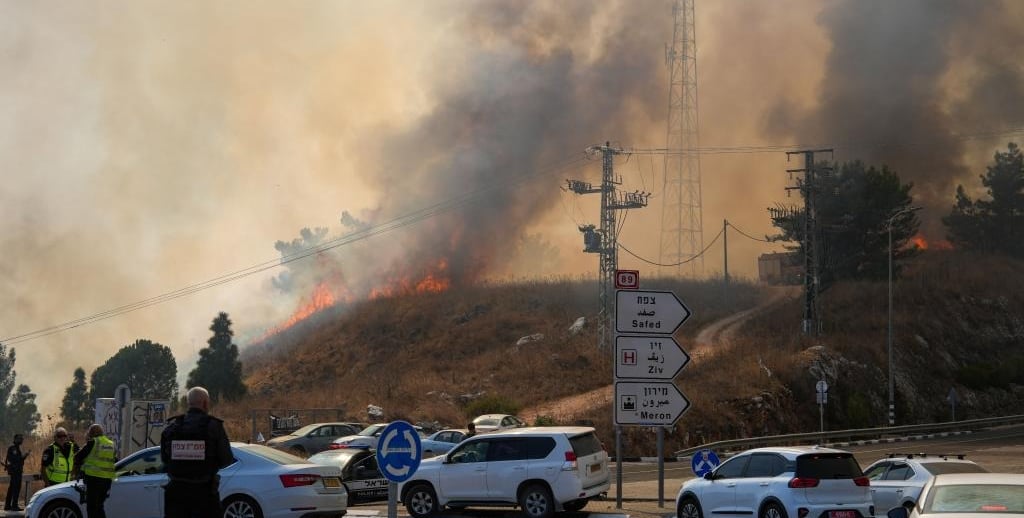

In early June 2026, as the Middle East conflict entered its 100th day, ceasefire arrangements across multiple fronts simultaneously collapsed. On June 2-3, during the fourth round of direct Israel-Lebanon talks in Washington, a trilateral US-Israel-Lebanon joint statement claimed Israel and Lebanon had agreed to a ceasefire on condition that Hezbollah ceased fire and withdrew its fighters south of the Litani River. On June 4, Hezbollah leader Naim Qassem explicitly rejected the partial ceasefire proposal and demanded a complete ceasefire. On June 5, the Israeli military launched airstrikes on multiple locations in southern Lebanon, killing at least 13 and wounding 15.
On the evening of June 7, Iran launched multiple rounds of missiles at Israel, citing retaliation for Israel‘s expanded military operations in Lebanon and airstrikes on Beirut’s southern suburbs. On June 8, the Israeli air force struck military targets in western and central Iran. Meanwhile, the situation in the West Bank concurrently deteriorated. On June 9, the UK, France, Australia, New Zealand, Canada, and Norway imposed coordinated sanctions on Jewish settlers involved in violent attacks against Palestinian civilians in the West Bank; France simultaneously announced a ban on Israeli Finance Minister Bezalel Smotrich‘s entry into French territory.
On June 10, the UN Security Council held an open meeting on the Middle East, where Secretary-General António Guterres warned that the situation continued to deteriorate and spill over, calling on all parties to pursue political solutions through mediation and dialogue. Guterres stated that intensified Israel-Hezbollah clashes since March had displaced over one million civilians in southern Lebanon and killed seven UN peacekeepers. On the same day, Turkish President Recep Tayyip Erdogan said that Israeli attacks on Syria and Lebanon had reached a point of threatening Turkey.