
Quad Launches Maritime Surveillance Push as North Korea Test-Fires Missiles and Kim Threatens Seoul
On May 26, 2026, North Korea’s Missile General Bureau and Academy of Defense Science conducted a comprehensive weapons test personally overseen by leader Kim Jong Un.
ASIA,POLITICS
Global N Press
5/27/20261 min read
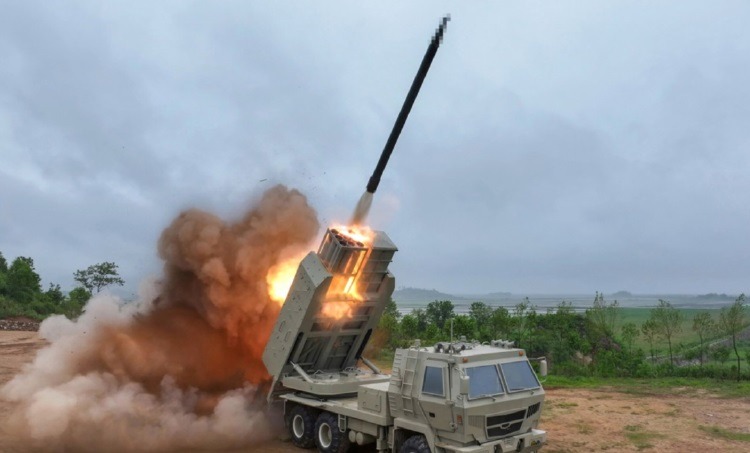
On May 26, 2026, North Korea’s Missile General Bureau and Academy of Defense Science conducted a comprehensive weapons test personally overseen by leader Kim Jong Un. The test involved a lightweight multi-purpose missile launch system and a multi-barrel tactical cruise missile system, with state media reporting on May 27 that the exercise evaluated special warhead capabilities, precision guidance for extended-range 240mm artillery rockets, and artificial intelligence terminal guidance for cruise missiles. Kim praised the test as a “significant signal of combat force upgrade” and claimed the new “tactical cruise flying projectile”—integrating super-precision self-guidance, terrain-matching navigation, and AI terminal guidance—can deliver precision strikes on targets up to 100 kilometers away, and will be deployed to long-range artillery brigades along the southern border.
Analysts at Yonhap News Agency assessed that if such claims are accurate, the missile system positioned along the Military Demarcation Line could place the entirety of the Seoul metropolitan area within range. Hours earlier, South Korea’s Joint Chiefs of Staff had detected multiple short-range ballistic missiles launched from North Pyongan Province toward the Yellow Sea. That same day, foreign ministers of the Quadrilateral Security Dialogue—U.S. Secretary of State Marco Rubio, Japanese Foreign Minister Toshimitsu Motegi, Australian Foreign Minister Penny Wong, and Indian External Affairs Minister Subrahmanyam Jaishankar—convened in New Delhi.
Their joint statement reaffirmed commitment to the “complete” denuclearization of North Korea, condemned its unlawful weapons development, and expressed grave concern over its malicious cyber activities. Crucially, the four nations launched the Indo-Pacific Maritime Surveillance Corporation Initiative to integrate surveillance capabilities for enhanced information sharing, and agreed to expand the Indo-Pacific Maritime Domain Awareness Initiative to provide near real-time commercial maritime data to regional countries. The Quad statement also addressed the East and South China Seas. On May 27, Chinese Foreign Ministry spokesperson Mao Ning responded that the situations in both seas remain generally stable, and that “forming exclusive blocs, hyping tensions, and stoking confrontation find no support.”