
Russia and China Veto UN Security Council Resolution on Strait of Hormuz as Guterres Warns of “Wider War” in Middle East
On April 7, 2026, the United Nations Security Council failed to adopt a resolution aimed at bolstering security in the Strait of Hormuz, with Russia and China exercising their veto power.
UNITED NATIONS,POLITICS
Global N Press
4/10/20261 min read
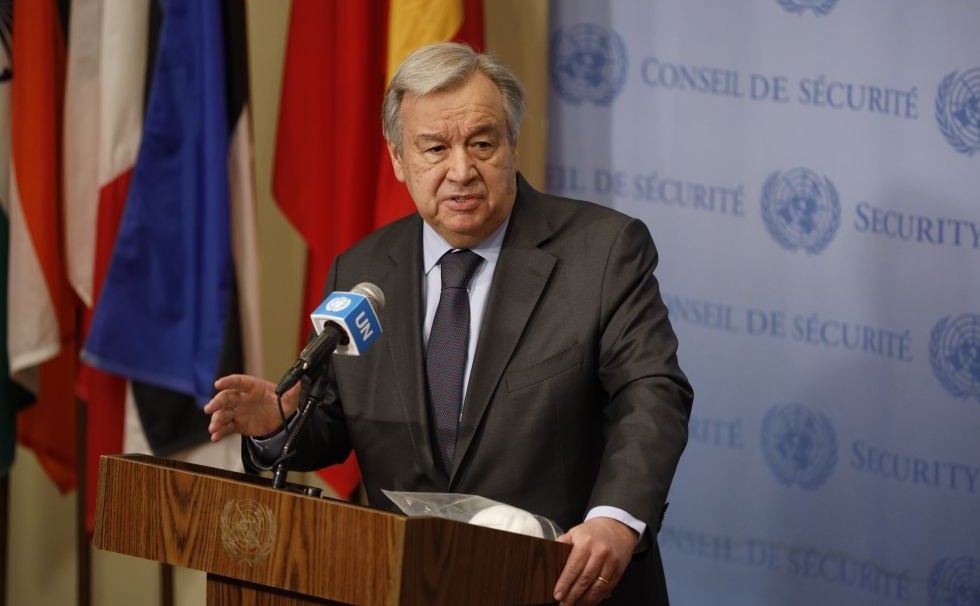

On April 7, 2026, the United Nations Security Council failed to adopt a resolution aimed at bolstering security in the Strait of Hormuz, with Russia and China exercising their veto power. The resolution sought to protect the critical shipping corridor, which remains largely closed to global trade and the transport of humanitarian aid amid the ongoing conflict. Russia‘s Permanent Representative to the UN, Vassily Nebenzia, stated that Moscow could not support a text that “sets a dangerous precedent for international law.” Earlier, on April 2, UN Secretary-General António Guterres held an emergency press conference at UN Headquarters in New York, issuing a stark warning as the conflict involving the United States, Israel, and Iran entered its second month.
“We are on the edge of a wider war that would engulf the whole Middle East with dramatic impacts around the globe,” Guterres said. He explicitly called on the United States and Israel to stop the war against Iran, and on Iran to cease attacks on its neighbors, emphasizing that disputes must be resolved through peaceful means and that the sovereignty and territorial integrity of all member states must be respected. Guterres revealed that he was in close contact with all parties and had dispatched his Personal Envoy Jean Arnault to the Middle East to seek a peaceful way forward.
Subsequently, on April 10, Guterres welcomed the commencement of talks between the United States and Iran in Islamabad under Pakistani mediation, urging all parties to seize this diplomatic opportunity to reach a durable and comprehensive agreement. Meanwhile, the Security Council issued a press statement condemning the incidents on March 29 and 30 that killed three Indonesian peacekeepers from the United Nations Interim Force in Lebanon (UNIFIL) and reaffirming that peacekeepers must never be the target of attack. “The conflict will not end on its own. It will only end when leaders choose dialogue over destruction. That choice still exists. It must be made now,” Guterres stressed on April 2.