Russia‘s Internal Economic Policy Dispute Erupts into Open as Rosneft Chief Publicly Attacks Central Bank on Ruble and Rates
During the 29th St. Petersburg International Economic Forum held from June 4-6, 2026, Igor Sechin, head of Rosneft and one of President Putin‘s closest allies, publicly attacked the policies of Central Bank Governor Elvira Nabiullina and Finance Minister Anton Siluanov, accusing them of strangling business viability.
RUSSIA,ECONOMY
Global N Press
6/12/20261 min read
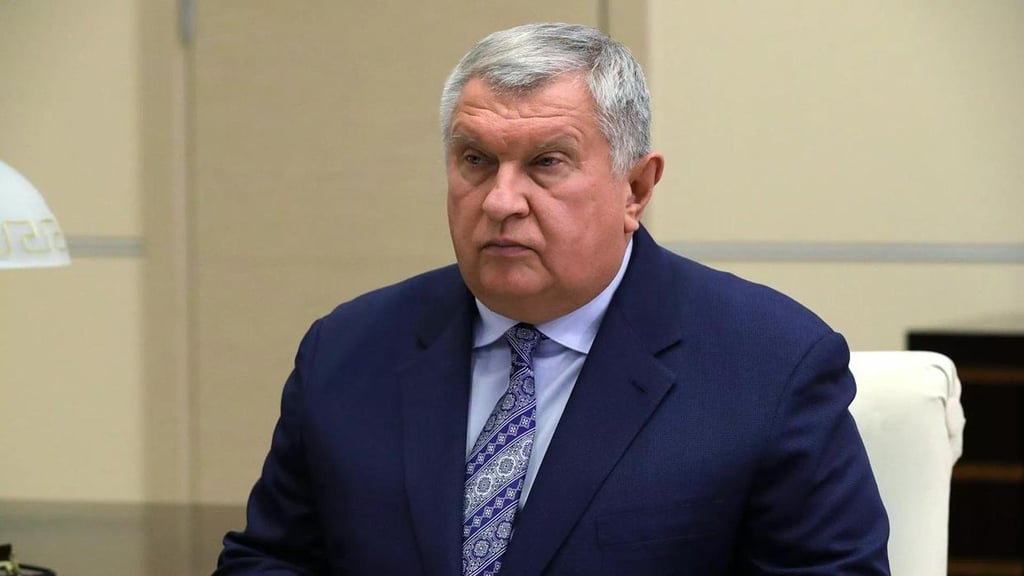
During the 29th St. Petersburg International Economic Forum held from June 4-6, 2026, Igor Sechin, head of Rosneft and one of President Putin‘s closest allies, publicly attacked the policies of Central Bank Governor Elvira Nabiullina and Finance Minister Anton Siluanov, accusing them of strangling business viability. Sechin claimed that due to an artificially overvalued ruble exchange rate, the federal budget lost more than two trillion rubles over two years. He also criticized the current 14.5% key rate as prohibitively high, stating that actual borrowing costs for small and medium-sized enterprises generally exceed 25%.
Following US Treasury sanctions on the Moscow Exchange in June 2024, public trading of the dollar and euro in Russia ceased, forcing the Central Bank to collect over-the-counter transaction data and calculate daily exchange rates using internal models. Sechin described this closed-door pricing mechanism as bizarre and inexplicable. As of early June 2026, the Central Bank‘s key rate remained at 14.5%, the ruble’s official exchange rate was approximately 71 to 78 rubles per dollar, and Urals crude oil prices held around $90 per barrel. On June 10, the Central Bank reported that monetary conditions continued to ease in April-May but remained tight, with retail loan growth slowing while corporate lending accelerated significantly.
On the same day, IMF Managing Director Kristalina Georgieva stated that although the IMF raised Russia‘s 2026 growth forecast from 0.8% to 1.1% in April, this does not reflect the full picture of economic fragility. On June 5, Economic Development Minister Maxim Reshetnikov said at the forum that despite difficulties, the Russian economy has maintained its market character and openness to external ties. On June 12, Russian Ambassador to Canada Oleg Stepanov said Russia would continue to oppose unilateral sanctions, while the head of the State Duma’s Budget Committee suggested that GDP growth could reach 2% by year-end if current positive trends are sustained.