
Sanctions and Low Oil Prices Squeeze Russian Finances, Triggering Severe Revenue Crisis
In January 2026, data indicates Russia's finances are under severe strain from Western sanctions and low global oil prices. The discount for Russia's Urals crude versus Brent has widened to about $24 per barrel. A former energy executive revealed some shipments to India were priced as low as $22-$25 per barrel, barely covering costs.
RUSSIA,ECONOMY
Global N Press
1/30/20261 min read
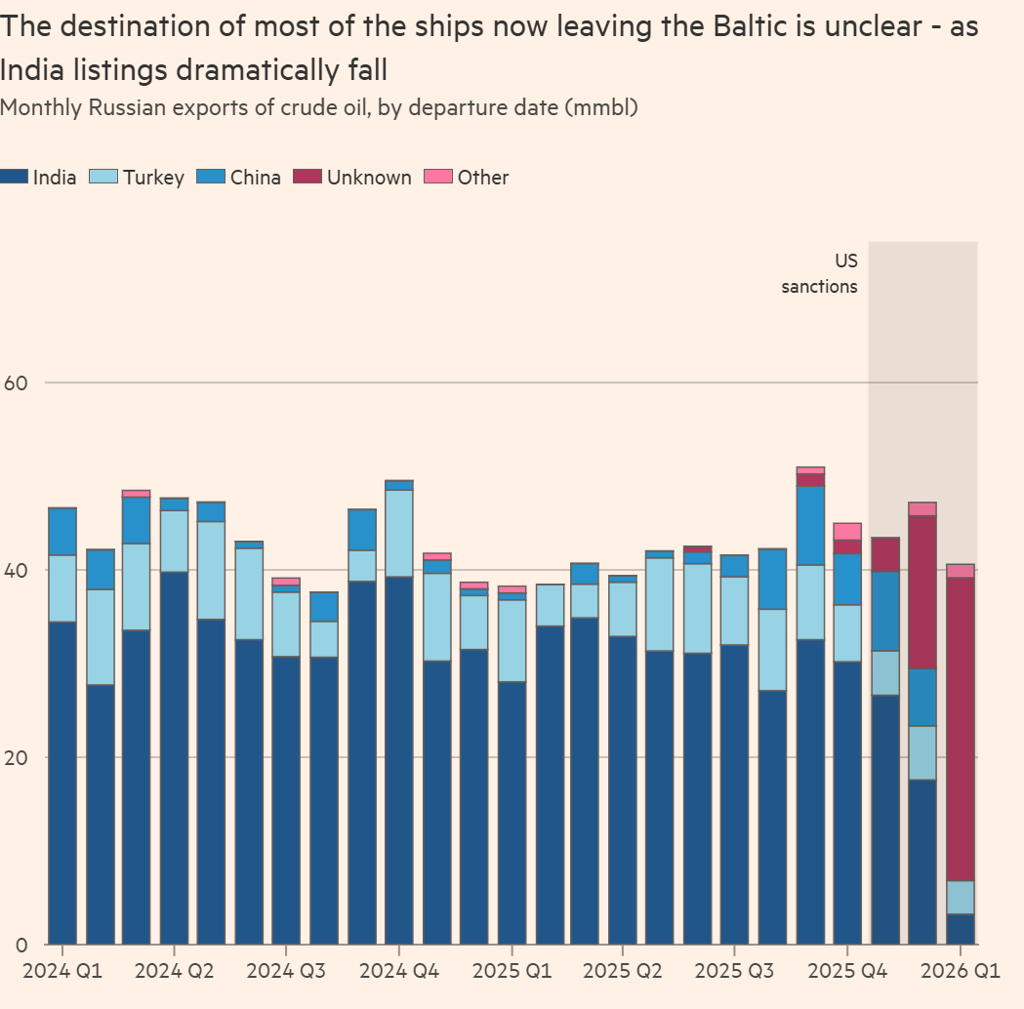
In January 2026, data indicates Russia's finances are under severe strain from Western sanctions and low global oil prices. The discount for Russia's Urals crude versus Brent has widened to about $24 per barrel. A former energy executive revealed some shipments to India were priced as low as $22-$25 per barrel, barely covering costs. Consequently, Russian energy revenues fell roughly 20% in 2025, contributing to a federal budget deficit of 2.6% of GDP, far exceeding initial plans. Deputy Finance Minister Vladimir Kolychev warned of a potentially large deficit in early 2026.
In response, Russia's 2026-2028 budget aims for balance by targeting a record 78% share of non-oil and gas revenue to reduce dependency. The government plans to cover the shortfall by raising the Value-Added Tax, adjusting taxes for small businesses, and issuing bonds. Analysts suggest that while Moscow strives for a more resilient fiscal structure, the structural decline in energy income and persistent sanctions are forcing difficult trade-offs between military expenditure, economic security, and social stability, posing sustained pressure on its long-term capacity.