
Trump Visits China for Talks With Xi as U.S. and Beijing Seek Stability Amid Trade and Security Tensions
U.S. President Donald Trump arrived in Beijing on Wednesday for a high-level visit expected to include meetings with Chinese President Xi Jinping, as Washington and Beijing attempt to stabilize relations amid persistent trade disputes, technology competition, and rising geopolitical uncertainty.
UNITED STATES,POLITICS
Global N Press
5/14/20263 min read
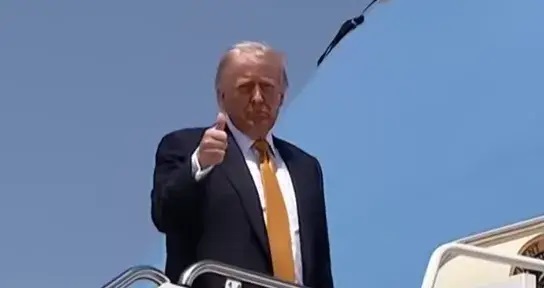

BEIJING, May 13, 2026 — U.S. President Donald Trump arrived in Beijing on Wednesday for a high-level visit expected to include meetings with Chinese President Xi Jinping, as Washington and Beijing attempt to stabilize relations amid persistent trade disputes, technology competition, and rising geopolitical uncertainty.
Chinese and U.S. officials have described the meetings, scheduled for May 14–15, as part of ongoing efforts to maintain communication channels between the world’s two largest economies despite widening strategic differences. The visit marks Trump’s first trip to China since returning to office earlier this year.
According to officials familiar with preparations for the summit, discussions are expected to cover tariffs, semiconductor export controls, artificial intelligence regulation, critical mineral supply chains, Taiwan, and instability in the Middle East.
Trade Frictions Continue Despite Limited Easing Measures
Although the two countries reached a limited tariff-reduction arrangement in late 2025, major economic disagreements remain unresolved.
The United States has continued imposing restrictions on advanced semiconductor exports and certain AI-related technologies destined for Chinese firms, arguing the measures are necessary to protect national security interests and sensitive technologies.
China has criticized many of those restrictions while continuing efforts to strengthen domestic manufacturing capacity and reduce reliance on foreign technology. Analysts say economic ties between the two countries remain substantial despite years of tariffs, sanctions, and investment restrictions.
U.S. officials traveling with Trump said economic discussions may also include agricultural exports, market access, manufacturing cooperation, and conditions for American companies operating in China. Several senior business executives accompanied the delegation, reflecting continued commercial interest in the Chinese market despite broader strategic tensions.
Technology and Critical Minerals Expected to Feature Prominently
Competition over advanced technologies is expected to remain a central issue during the talks.
Recent disputes involving semiconductors, cloud computing infrastructure, and artificial intelligence development have increasingly shaped the broader U.S.-China relationship. At the same time, governments worldwide have intensified efforts to secure access to rare earths and other critical minerals used in electric vehicles, renewable energy systems, defense technologies, and data infrastructure.
China remains a major global processor of several key rare earth materials, while the United States and allied countries have sought to diversify supply chains and reduce dependency on Chinese-controlled refining capacity.
Policy analysts say both governments may seek to prevent economic competition from escalating into broader systemic confrontation, particularly in sectors linked to national security and advanced manufacturing.
Taiwan and Regional Security Remain Sensitive Issues
Taiwan is also expected to remain a major point of discussion.
Beijing has repeatedly opposed U.S. military cooperation and political engagement with Taiwan, while Washington has continued emphasizing freedom of navigation and security commitments in the Indo-Pacific region.
Military activity around the Taiwan Strait and the South China Sea has increased in recent years, contributing to concerns among regional governments and international observers over the risk of miscalculation.
Diplomatic analysts say the summit could help preserve crisis-management communication mechanisms even if neither side is expected to change its core strategic positions.
Middle East Instability Adds Pressure to Energy Markets
Developments in the Middle East, particularly concerns surrounding Iran and the Strait of Hormuz, are also expected to influence discussions between the two leaders.
Energy markets have faced renewed volatility amid fears that further escalation in the region could disrupt global oil shipments and increase inflationary pressure worldwide.
China remains one of the world’s largest energy importers, while the United States maintains a significant military and naval presence across key Middle East shipping routes.
Economists warn that prolonged instability in the Gulf region could weigh on global growth, increase transportation and manufacturing costs, and complicate policy decisions for central banks already managing uneven economic conditions.
Focus Likely to Be on Managing Tensions
Despite the high-profile nature of the summit, analysts say expectations for major breakthrough agreements remain limited.
Instead, the meetings are widely viewed as an attempt to prevent further deterioration in relations and preserve direct dialogue between senior leadership during a period of broader geopolitical uncertainty.
Investors and policymakers are expected to closely monitor the summit for signals regarding future trade policy, technology restrictions, and cross-border investment conditions.
While major structural disagreements between Washington and Beijing remain unresolved, the renewed high-level engagement reflects growing concern in both countries over the potential economic and geopolitical consequences of continued escalation.