
UN Downgrades 2026 Global Growth Forecast to 2.5% as Middle East Crisis Halts Disinflation, Hits Developing Economies Hardest
On May 19, 2026, the UN’s economic report revised the global growth outlook for 2026 down to 2.5%—0.2 points below January’s 2.7%—the lowest annual rate since the onset of the pandemic.
UNITED NATIONS,ECONOMY
Global N Press
5/19/20261 min read
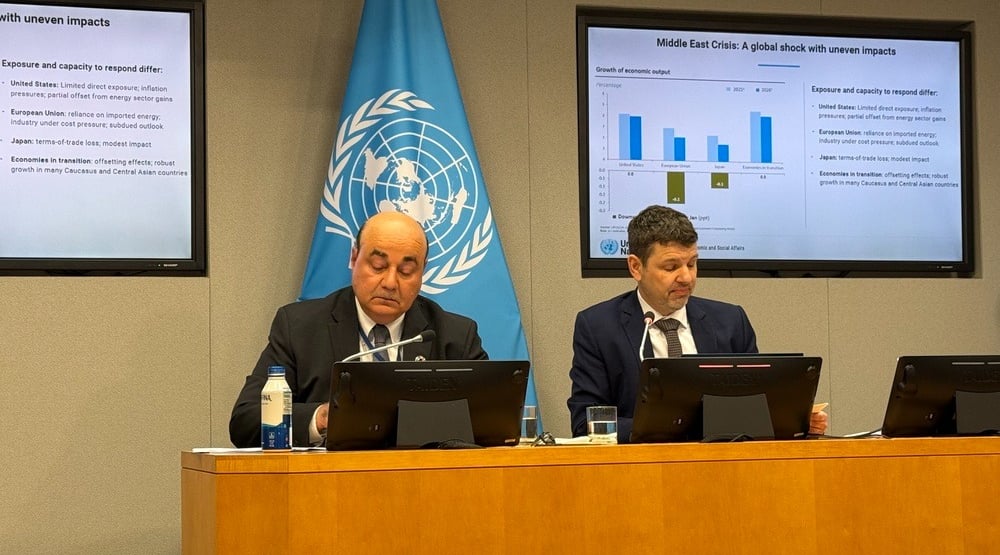
On May 19, 2026, the United Nations Department of Economic and Social Affairs released its World Economic Situation and Prospects 2026 Mid-year Update, revising the global GDP growth forecast for 2026 down to 2.5 percent—a 0.2 percentage point cut from the January projection of 2.7 percent, marking the lowest level since the COVID-19 pandemic. The report projects a modest recovery to 2.8 percent in 2027.
According to the assessment, the Middle East crisis has delivered a major shock to the global economy primarily through the energy sector, with constrained supply, surging prices, and rising freight and insurance costs cascading through supply chains and driving up production costs worldwide. Most concerning, the conflict has halted the global disinflation trend that had been underway since 2023. Inflation in developed economies is forecast to rise from 2.6 percent in 2025 to 2.9 percent in 2026, while developing economies face a sharper increase from 4.2 percent to 5.2 percent as higher energy, transport, and import costs erode real incomes and broaden price pressures. Food prices represent a particular concern, as disrupted fertilizer supplies are pushing up agricultural input costs, threatening reduced crop yields and further upward pressure on food prices.
UN Under-Secretary-General for Economic and Social Affairs Li Junhua stated that the Middle East crisis has intensified strains across developing economies, with rising borrowing costs and renewed capital flow pressures risking deeper debt vulnerabilities and constraining resources available for sustainable development at a critical moment. Regionally, Western Asia is expected to be hit hardest, with growth projected to plunge from 3.6 percent in 2025 to 1.4 percent in 2026, driven not only by the energy shock but also by direct infrastructure damage and severe disruptions to oil production, trade, and tourism. The report further warned that if the Strait of Hormuz remains closed for an extended period and energy supply disruptions persist, global growth could slow even further, while inflationary, debt, and food security risks would escalate markedly.