
U.S. Deploys Two Aircraft Carriers to Middle East Amid Rising Tensions with Iran
The U.S. Navy’s aircraft carrier USS Gerald R. Ford arrived off the coast of Israel on February 27, joining the USS Abraham Lincoln carrier strike group already operating in the region. The deployment marks the first time in recent years that two U.S. carrier strike groups have been simultaneously positioned in the eastern Mediterranean and Red Sea areas, providing enhanced operational flexibility and rapid-response capability.
MIDDLE EAST,POLITICS
Global N Press
2/27/20261 min read
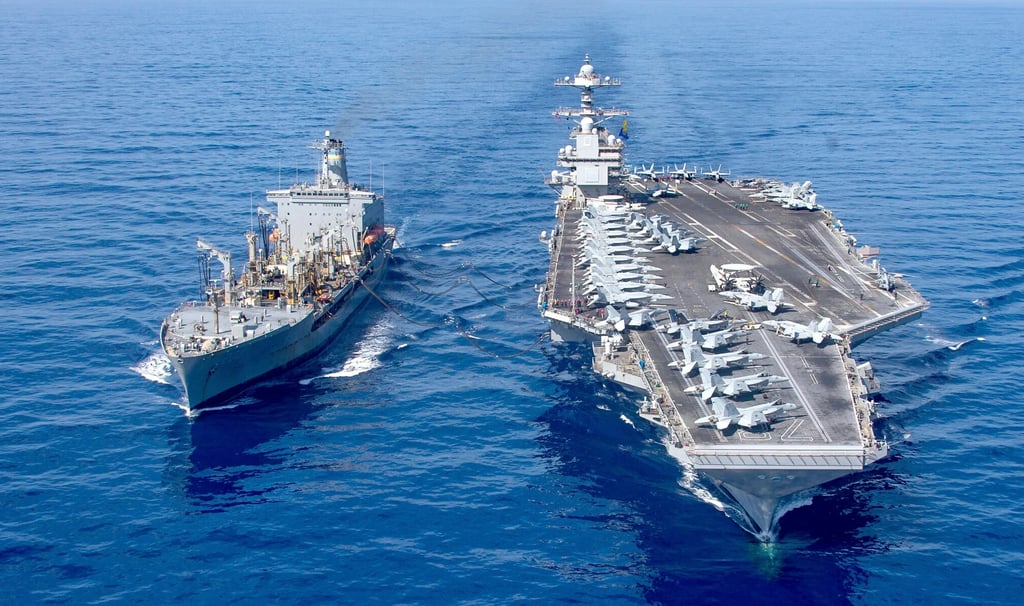

Washington / Middle East – February 27, 2026
Dual Carrier Deployment in the Region
The U.S. Navy’s aircraft carrier USS Gerald R. Ford arrived off the coast of Israel on February 27, joining the USS Abraham Lincoln carrier strike group already operating in the region. The deployment marks the first time in recent years that two U.S. carrier strike groups have been simultaneously positioned in the eastern Mediterranean and Red Sea areas, providing enhanced operational flexibility and rapid-response capability.
Both strike groups are equipped with fixed-wing fighters, airborne early warning aircraft, and anti-submarine warfare platforms, enabling strikes against land and maritime targets within several hundred kilometers, according to a U.S. Navy spokesperson.
Strategic Implications
U.S. officials described the deployment as a routine measure to ensure maritime security and reassure regional allies. Analysts from the Center for Strategic and International Studies (CSIS) note that the dual presence also provides Washington with increased leverage in regional diplomatic and security matters, particularly regarding Iran’s nuclear and missile programs.
“The visible concentration of naval assets signals the U.S. commitment to regional security and its readiness to respond to potential escalations,” said Michael O’Hanlon, senior fellow at CSIS.
Market Impact
Following the announcement, Brent crude oil prices increased by approximately 1.8%, reflecting heightened market sensitivity to potential regional instability, according to Bloomberg data. Energy economists caution that prolonged uncertainty in the Middle East could affect global oil supply chains, emphasizing the need for continued monitoring by investors and industry stakeholders.
International Reactions
European and Asia-Pacific governments have called for restraint and encouraged diplomatic engagement. Analysts highlight that while a dual carrier deployment may strengthen short-term deterrence, extended high-intensity military operations could influence regional security dynamics and require careful management to avoid unintended escalation.