
US Withdraws Draft UN Resolution on Strait of Hormuz; Rubio Warns of Risks to Council Credibility
The United States has withdrawn a UN Security Council draft resolution on maritime tensions in the Strait of Hormuz after failing to win support from other permanent members, Secretary of State Marco Rubio confirmed Tuesday.
UNITED NATIONS,POLITICS
Global N Press
5/7/20262 min read
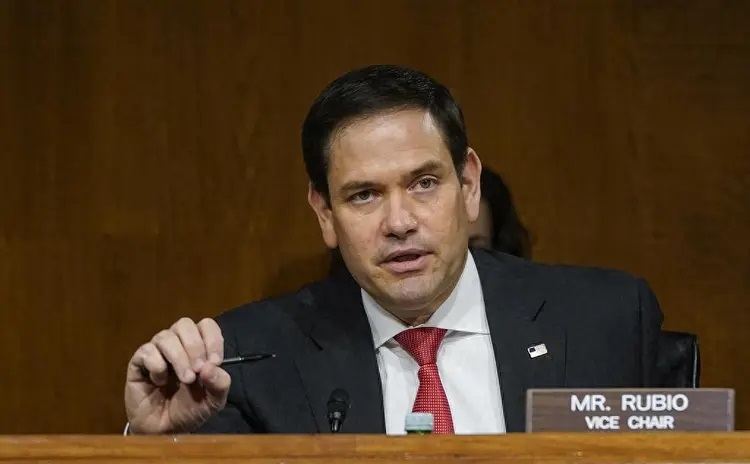

UNITED NATIONS, May 5, 2026 — The United States has withdrawn a UN Security Council draft resolution on maritime tensions in the Strait of Hormuz after failing to win support from other permanent members, Secretary of State Marco Rubio confirmed Tuesday.
Washington Pulls Revised Proposal After China, Russia Veto Threat
After closed-door talks with Russian Foreign Minister Sergey Lavrov, Rubio said the US had significantly revised the draft to address concerns raised by China and Russia. He acknowledged that the initial text contained ambiguous language which some council members feared could be used to authorize military action in the strategic shipping corridor.
Anonymous diplomatic sources at the UN confirmed that neither China nor Russia backed the updated draft. Facing a likely double veto, US officials withdrew the resolution before a formal vote could take place.
Legal Disputes Block Council Consensus
China and Russia vetoed the earlier version of the resolution, arguing that vague enforcement terms risked legitimizing unregulated military operations. The two countries insist that maritime security resolutions must explicitly bar unauthorized force, limiting military intervention to cases approved under Chapter VII of the UN Charter.
The revised draft dropped broad enforcement provisions and focused on diplomatic and economic measures. However, it retained language that called on Iran to halt what the US describes as disruptive maritime activities. Iran has rejected all US accusations, stating that its regional maritime operations are legitimate defensive responses to the persistent US and allied military presence near its territorial waters.
Regional Tensions Persist in Key Oil Shipping Lane
The Strait of Hormuz, through which roughly 20% of global crude oil passes, remains geopolitically volatile amid the diplomatic gridlock at the UN.
Tensions flared in late February after reports of US and Israeli strikes on Iranian targets. Iran said it responded with missile strikes against what it described as Western military outposts in the Middle East. The escalation triggered intermittent shipping disruptions. While the US accuses Iran of obstructing maritime freedom of navigation, Iran maintains that its patrols are aimed at safeguarding national sovereignty. Independent verification of incidents on the ground remains limited.
UN Council Effectiveness Under Scrutiny
Rubio criticized the council’s failure to pass the resolution, questioning its global security mandate. “If the Security Council cannot act to preserve freedom of navigation in one of the world’s most vital waterways, then we have to ask what role it can play,” Rubio said.
China and Russia countered that confrontational UN resolutions serve to escalate regional friction, and they urged all parties to pursue direct dialogue and diplomatic de-escalation.
No Immediate Plans to Revive Resolution
Diplomatic sources confirmed that the US has no plans to resubmit the resolution in the near term. Narrower proposals focused on humanitarian and environmental maritime issues are seen as more likely to achieve cross-council consensus.
The diplomatic deadlock has pushed up shipping operational costs and insurance risk premiums for vessels transiting the strait, according to maritime industry analysts. Analysts add that Security Council divisions reflect broader great-power rifts that are hindering a unified international response to regional security crises.